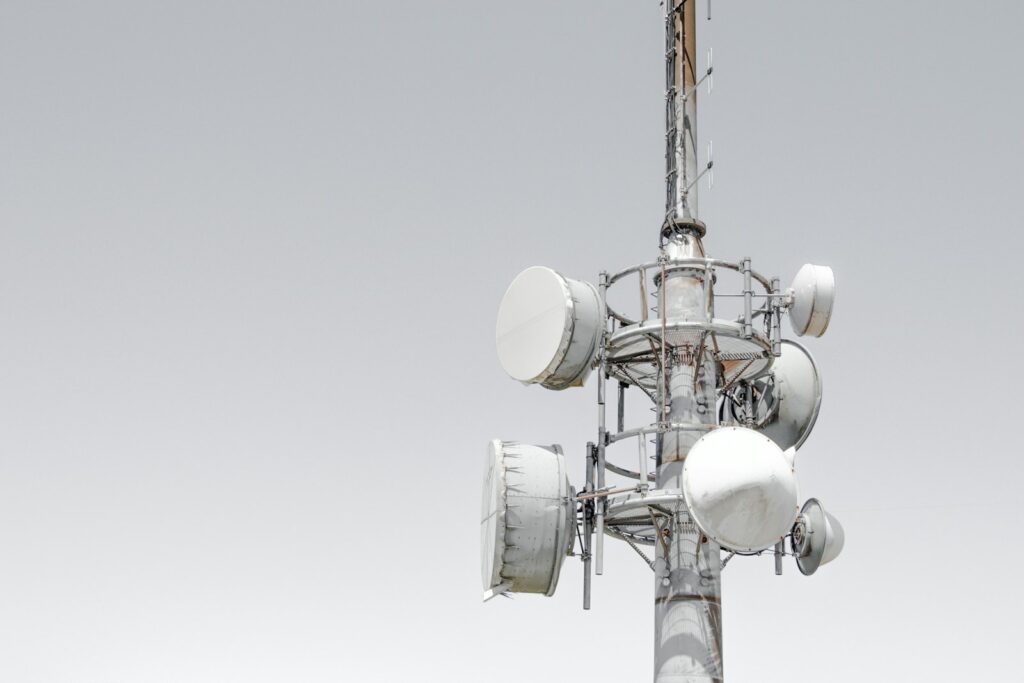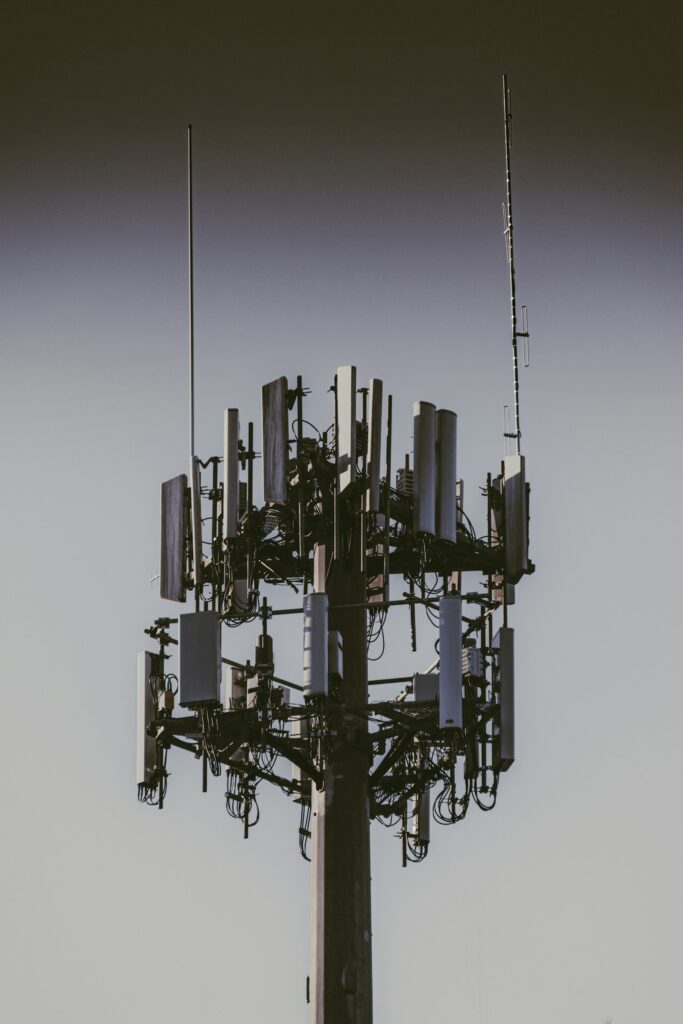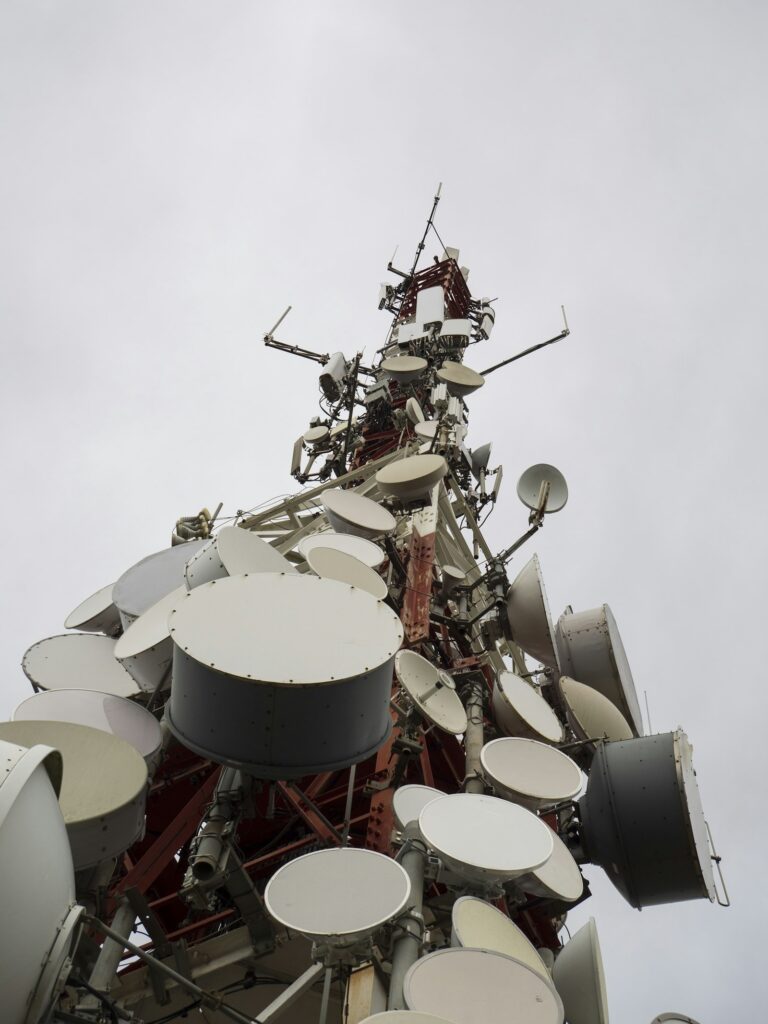
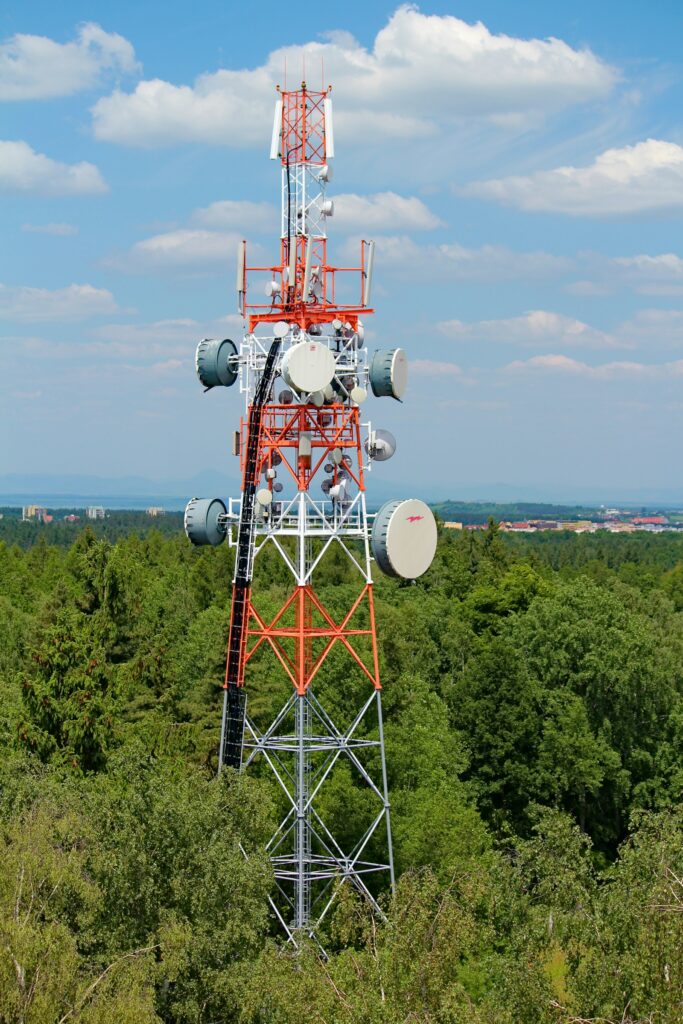
Ericsson remote radio units sit on the tower or pole, close to the antenna, and handle the RF side of the cell site. Each unit covers one or more bands, so the part number tells you exactly where it fits.
This guide explains the Radio 22xx, 44xx and 88xx series of Ericsson remote radio units. It also lists every part number we supply, with the band behind each one. Silverback supplies new and used units, tested before they ship.
What Ericsson remote radio units do
A remote radio unit links to the baseband over fiber and to the antenna over short jumpers. Because it sits near the antenna, less signal is lost in long feeder cables. That is why remote radios became the standard on modern macro sites.
Ericsson remote radio units belong to Ericsson Radio System, along with AIR antennas and RAN Compute basebands. They range from 2 to 8 transmit and receive paths. In addition, they come in single band and multi band versions, so one unit can serve two or three bands.
The Radio 22xx, 44xx and 88xx series
The series number gives a first hint about the size of Ericsson remote radio units. However, the label is still the final word, so always confirm it before you order.
Radio 22xx units
The 22xx radios in our range cover low and mid bands. For example, the Radio 2217 B20 (KRC161549/1) is a 2T2R macro radio for Band 20 (800 MHz). The Radio 2238 B8 B20 B28B (KRC161797/1) covers three low bands in one box, which saves space on a crowded mast. In addition, the Radio 2242 B1 B3 (KRC161726/1) serves Band 1 and Band 3 for LTE.
Radio 44xx units
The 44xx radios in our range support 4x4 MIMO. The Radio 4466 44B1 44B3 44B7 C (KRC161923/1) is an outdoor 4T4R radio for Bands 1, 3 and 7. Similarly, the Radio 4499 (KRC161787/1) is a dual band 4T4R unit for Band 1 and Band 3.
Radio 88xx units
The Radio 8863 is an 8T8R TDD radio for LTE and 5G NR. We supply it for Band 40 (KRC161860/1), Band 38A (KRC161939/1) and Band 42 (KRC161865/1). Since TDD radios work differently from FDD radios, never swap an 8863 for an FDD unit.
Matching Ericsson remote radio units by band
Band is the first thing to match. The model name lists each band with a B code, and some codes add a sub-band letter. For instance, B28B means sub-band B of Band 28, while B38A means sub-band A of Band 38.
Use this quick reference for the bands in our table.
- Band 1 is 2100 MHz, and Band 3 is 1800 MHz.
- At the low end, Band 8 is 900 MHz and Band 20 is 800 MHz.
- Band 7 is 2600 MHz, while Band 28 is 700 MHz.
- For TDD, Band 38 is 2600 MHz and Band 40 is 2300 MHz.
- Band 42 is 3.5 GHz.
- In North America, Band 66 covers AWS and Band 71 is 600 MHz.
Those last two bands show up on radios such as the Radio 4415 B66A (KRC161644/1) and the Radio 4478 B71 (KRC161699/1). The Radio 4478 B71 supports both 2x2 and 4x4 MIMO.
Ericsson remote radio units part numbers we supply
The table lists every Ericsson remote radio unit in this family. Each part number links to its inventory page.
| Part number | Product | Notes |
|---|---|---|
| KRC161495/1 | Radio 4415 B7 | Band 7 (2600 MHz) remote radio |
| KRC161644/1 | Radio 4415 B66A | Band 66A (AWS) remote radio |
| KRC161699/1 | Radio 4478 B71 | Band 71 (600 MHz), 2x2 and 4x4 MIMO |
| KRC161787/1 | Radio 4499 | Dual band 4T4R, Band 1 and Band 3 |
| KRC161622/1 | Radio 2219 B1 | Band 1 (2100 MHz) remote radio |
| KRC161836/1 | Radio 2279 | Confirm the band on your unit label |
| KRC161472/3 | Multi-standard remote radio | AWS downlink 2110 to 2200 MHz, up to 60 W |
| KRC161923/1 | Radio 4466 44B1 44B3 44B7 C | Outdoor 4T4R, Band 1, Band 3 and Band 7 |
| KRC161549/1 | Radio 2217 B20 | 2T2R macro radio, Band 20 (800 MHz) |
| KRC161797/1 | Radio 2238 B8 B20 B28B | Band 8, Band 20 and Band 28B |
| KRC161706/1 | Radio 4418 B40T | Band 40 (2300 MHz TDD), LTE and 5G NR |
| KRC161860/1 | Radio 8863 B40 | 8T8R TDD, Band 40 (2300 MHz) |
| KRC161499/1 | Radio 2217 B28B | Band 28 sub-band B (700 MHz) |
| KRC161939/1 | Radio 8863 B38A | TDD, Band 38A (2600 MHz) |
| KRC161864/1 | Radio 2279 B8 B20 | Band 8 (900 MHz) and Band 20 (800 MHz) |
| KRC161777/1 | Radio 4480 44B1 44B3 C | Outdoor macro radio, Band 1 and Band 3 |
| KRC161726/1 | Radio 2242 B1 B3 | LTE radio, Band 1 and Band 3 |
| KRC161865/1 | Radio 8863 B42 | Band 42 (3.5 GHz), LTE and 5G NR |
| KRC161950/11 | Radio 4490 44B1 44B3 C | Dual band, Band 1 and Band 3 |
A few notes on the table. The KRC161472/3 is a multi-standard radio for the AWS downlink, rated at up to 60 W conducted output. The Radio 2279 (KRC161836/1) also comes as a B8 B20 version, so read the band from your label before you order.
Power, MIMO and baseband compatibility
After band, check output power and the number of paths. A replacement with less power or fewer paths can shrink coverage, even on the right band. So match both to the site design rather than to a nearby part number.
Then confirm the radio works with your baseband and software. Ericsson remote radio units connect to RAN Compute basebands, and the baseband software must support the radio model. Older CPRI radios can also join packet fronthaul through an Ericsson Radio Gateway, which converts CPRI to eCPRI.
For basebands and AIR units, see our guide to AIR antennas and RAN Compute. For older sites, our RBS 6000 spares guide covers RUS and RRUS radios.
Common mistakes when buying Ericsson remote radio units
Most ordering mistakes come from reading the model name and skipping the rest of the label. Watch for these four.
- Ordering by model name alone, when the Radio 4415 comes in both B7 (KRC161495/1) and B66A versions.
- Ignoring the sub-band, since a B28B radio such as the KRC161499/1 does not cover all of Band 28.
- Mixing TDD and FDD, because a Band 40 TDD radio cannot stand in for a Band 3 FDD radio.
- Skipping the variant, although the digits after the slash can change band or power.
New vs used Ericsson remote radio units
Most swaps on live sites are like for like, so a tested used radio is often the smart choice. It matches the existing part number and costs less than new. However, a new unit makes sense when you want the longest service life on a fresh build.
Silverback tests used Ericsson remote radio units before they ship, and you can ask for new or used condition on any quote. Read refurbished vs new hardware for more on the trade-offs.
Selling back retired radios
When you upgrade a site, old Ericsson remote radio units still have resale value. Silverback buys back decommissioned Ericsson gear and handles it under R2v3, ISO 14001 and ISO 45001. As a result, the retired units can help fund the next upgrade.
Silverback supplies Ericsson radios for spares pools as well as planned swaps. Send us the part number and get pricing and lead time within one business day. You can also browse our inventory, request a quote for a full list, or read our Ericsson buying guide for the wider portfolio.
Frequently Asked Questions
What does B66A mean on an Ericsson radio?
It means the radio covers Band 66 sub-band A, the AWS band. The Radio 4415 B66A, part KRC161644/1, is one example.
Is the Radio 4415 B7 the same as the Radio 4415 B66A?
No. They share a series but cover different bands, so they have different part numbers and you cannot swap one for the other.
Can a Radio 8863 replace an FDD radio?
No. The Radio 8863 is a TDD radio, so it only fits sites that run TDD bands such as Band 40, 38 or 42.
Do you test used Ericsson remote radio units?
Yes. Silverback tests every used radio before it ships, and you can ask for new or used condition.
How fast can I get a quote?
Send the part number and quantity, and we reply with pricing and lead time within one business day.
Get a quote for Ericsson remote radio units
Send us the part numbers from your labels, the quantity and the condition you want. We reply with pricing and lead time within one business day.
Call (888) 391-5211 or fill in our quote form. Silverback supplies new and used Ericsson remote radio units, tested before they ship.